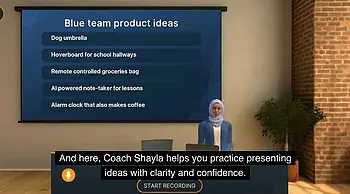
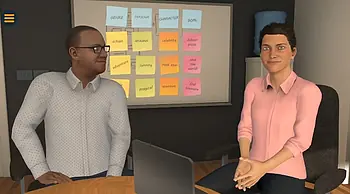
Business Scenarios Virtual Simulations
Business continuity depends on how effectively decisions are made, coordinated, and executed under pressure. Yet most companies have no structured way to rehearse critical processes before applying them in live operations. Once a decision is implemented, there is no margin for error.
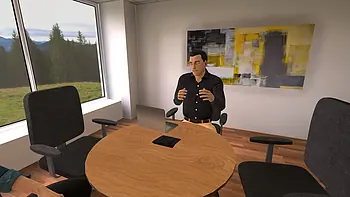
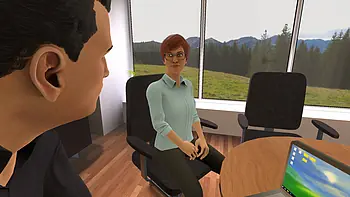
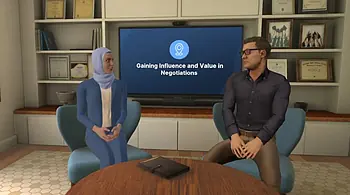
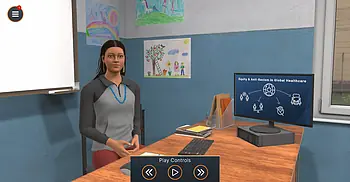
Virtual simulations of business scenarios offer a solution. By replicating operational, strategic, and cross-functional decision points in a controlled environment, organizations can test responses, validate processes, and align departments without disrupting ongoing work. Every participant interacts with a structured business scenario that mirrors real responsibilities, risks, and consequences.
Why Operational Planning Often Fails to Scale
Business planning is often conducted in isolation from the departments responsible for implementation. Strategic goals may be clear at the executive level but poorly translated across teams, functions, or geographies. Internal misalignment creates delays, duplicate work, and reactive decisions.
In many organizations, operational handbooks, static presentations, and high-level briefings serve as the only means of preparing teams for change. Execution suffers when staff cannot anticipate the interactions, constraints, or timing of each business scenario.
Virtual business simulations address this by presenting the entire scenario dynamically. Participants engage with real workflows, make decisions in sequence, and understand how one team's actions affect another's results. Instead of relying on theoretical exercises, teams engage with practical applications.
What Virtual Simulation Brings to Business Management
Unlike instructional training tools, virtual simulations are designed to replicate end-to-end business processes with interactive logic, conditional feedback, and measurable outcomes. Each simulation presents an evolving business scenario with multiple decision points, time constraints, and performance metrics.
Participants are assigned roles aligned with their real positions and interact with systems, procedures, and events that reflect the company's actual environment. Business units see the downstream impact of their actions, track communication bottlenecks, and experience the consequences of delays or misalignment in real time.
Core advantages may include:
- Consistent scenario replication. All teams engage with the same simulation conditions regardless of time or location.
- Contextual decision-making. Users respond within their operational role, using realistic parameters and tools.
- Scalable performance metrics. Outcome data is collected uniformly and supports performance review and process refinement.
- Process visibility. Teams gain clarity on task dependencies, escalation paths, and time-critical handoffs.
Virtual business simulation replaces assumption with verified experience.
Structuring Decision-Making Under Pressure
High-stakes scenarios often expose weaknesses in delegation, escalation, or timing. Virtual simulations are designed to reveal such gaps. Each simulation replicates realistic constraints: limited information, overlapping responsibilities, and external dependencies.
Managers observe how teams respond when conditions change or when partial data requires immediate judgment. The simulation structure ensures all participants receive the same prompts and opportunities, making results comparable and actionable.
Commonly simulated scenarios include:
- Supply chain delays require reallocation and supplier communication.
- Customer satisfaction drops due to product or support issues.
- Cross-department collaboration on pricing or budget prioritization.
- Internal response to compliance changes or policy updates.
- Introduction of new workflows, approval chains, or systems.
Each business scenario reflects a practical, high-impact situation relevant to daily operations.
Preempting Failure Through Scenario Rehearsal
Not every risk can be anticipated through traditional documentation. Business simulation allows for controlled failure followed by structured review. Employees are not only exposed to complex decision-making but also to the consequences of delays, miscommunication, or incorrect prioritization.
Repeating scenarios under slightly altered conditions improves judgment, increases responsiveness, and builds confidence across roles. Leadership teams benefit from immediate insight into process gaps and individual performance under time pressure.
Every simulation contributes to long-term operational consistency and strengthens internal alignment without introducing new risk.
Aligning Departments on Shared Business Scenarios
Different interpretations of strategic intent often compromise operational alignment. Virtual business simulation eliminates ambiguity by engaging each department with the same process, timeline, and expected outcomes.
All participants view the full business scenario from their specific position, allowing sales, operations, finance, and support to respond in real time. Errors caused by role assumptions or process misinterpretation become visible during the simulation and can be corrected before actual deployment.
Benefits of shared simulation include:
- Improved cross-functional understanding. Departments understand how their role supports or limits others.
- Faster conflict resolution. Points of friction are identified during rehearsal, not during execution.
- More reliable handoffs. Teams develop practical experience managing dependencies across units.
- Unified terminology and reference points. Simulations use internal workflows and systems to prevent translation errors.
You gain clarity across the organization before deploying new procedures or policies.
Scaling Business Readiness Without Location Constraints
Traditional rollouts are often delayed due to the logistical burden of in-person sessions, instructor availability, or equipment limitations. Virtual simulation eliminates these constraints. Once a business scenario is modeled, it becomes accessible to all users, regardless of department, region, or time zone.
Teams complete the simulation independently but within a controlled, standardized framework. As a result, operational readiness scales with minimal delay or resource impact. Every participant gains the opportunity to engage directly with current processes, new initiatives, or strategic shifts.
Virtual simulation supports scalable execution through:
- Simultaneous deployment across distributed teams.
- Role-based variations within a shared business scenario.
- Localization options for global divisions.
- Availability independent of trainer scheduling or live sessions.
Consistency and reach increase without requiring additional overhead.
Measuring Readiness Through Simulation Performance
Assessing readiness often relies on abstract metrics such as survey responses, test scores, or self-assessments. Virtual business simulations replace those methods with concrete behavioral data. Every decision, delay, and action taken during the simulation is recorded and mapped to performance indicators.
You receive detailed reports on who completed the simulation, what choices they made, and how their actions aligned with organizational goals. Leadership can identify individual, team, or process-level issues using factual evidence.
Assessment capabilities include:
- Performance scoring is tied to decision outcomes.
- Process adherence tracking by role or team.
- Comparative analysis across departments or regions.
- Simulation completion reports for compliance documentation.
Evaluating readiness becomes measurable, structured, and directly relevant to operational needs.
How to Apply Simulation to Main Business Initiatives
Organizations frequently implement new technologies, shift product strategies, or revise compliance policies. Each of these changes introduces uncertainty that cannot be resolved through documents alone. Virtual simulations help mitigate such risks by allowing employees to apply changes inside a digital model before encountering them in production.
Every business scenario can be adapted to reflect recent updates, new tools, or evolving requirements. The same simulation platform becomes a long-term resource for transition management.
Practical applications are:
- Testing of revised workflows in sales, support, or logistics.
- Rehearsals for public-facing responses during crisis situations.
- Simulated performance under new software or digital tools.
- Cross-functional planning during market entry or expansion.
Teams gain operational familiarity before facing real-world consequences.
Reducing Escalation and Support Load
Incomplete preparation often results in additional support tickets, escalations, or delays. Virtual simulation helps minimize this impact by exposing employees to critical decisions, system interactions, and failure points in advance.
Support staff benefit as well. By engaging with the same simulations used by operations teams, they understand context and can resolve issues faster. The number of internal escalations decreases when field personnel and support functions share a consistent understanding of procedures and logic. Small improvements in preparation yield measurable savings across time, cost, and staffing.
The Enhancement of Long-Term Organizational Resilience
Virtual simulations do more than prepare employees for isolated scenarios. Over time, they reinforce a culture of structured response, proactive coordination, and evidence-based decision-making. Business units build confidence through repeated application, while leadership gains transparency into systemic weaknesses.
Strategic changes become easier to implement, communication improves, and reaction time shortens. Instead of relying on outdated training methods or reactive planning, your organization gains a system for preparing consistently and responding effectively.
Conclusion
Business scenarios are complex. Each decision affects multiple roles, processes, and outcomes. When teams are unprepared, organizations suffer from inefficiencies, delays, and preventable failures.
Virtual simulation offers a controlled, scalable, and measurable way to rehearse operations, align departments, and validate decisions before deployment. Teams respond with accuracy because they have practiced under realistic conditions. Leadership gains insight because each simulation provides clear, structured data.
Operational readiness becomes standard, not occasional. Teams stop reacting and begin executing with confidence.
Virtual business simulation allows organizations to manage complexity through experience, not assumption. Results improve because every scenario has already been tested, reviewed, and refined.
Found 26 results