Loading...

Loading...
Loading...

Loading...
Loading...

Loading...
Loading...
Loading...
Loading...
Loading...
Key Learning Outcomes
- Understanding why manual handling injuries are among the most common workplace disorders.
- Recognition of risks linked to improper handling, including lower back injuries, sprains, strains, hernias, repetitive strain injuries, and damage to wrists, shoulders, neck, and ankles.
- Avoidance of unsafe movements such as twisting, overreaching, or sudden directional changes while carrying loads.
- Identifying when a load requires a team lift or mechanical aid due to weight or size.
- Checking load stability and assessing environmental factors that increase risk, including space constraints or uneven surfaces.
- Eliminating manual handling tasks where possible.
- Substituting heavy or awkward loads with lighter or alternative materials.
- Using engineering controls such as pallet jacks, hoists, or conveyor systems.
- Applying administrative controls including task rotation, supervision, and safe work procedures.
- Selecting appropriate PPE, including gloves and supportive footwear.
- Planning each lift by assessing weight, destination, and required equipment.
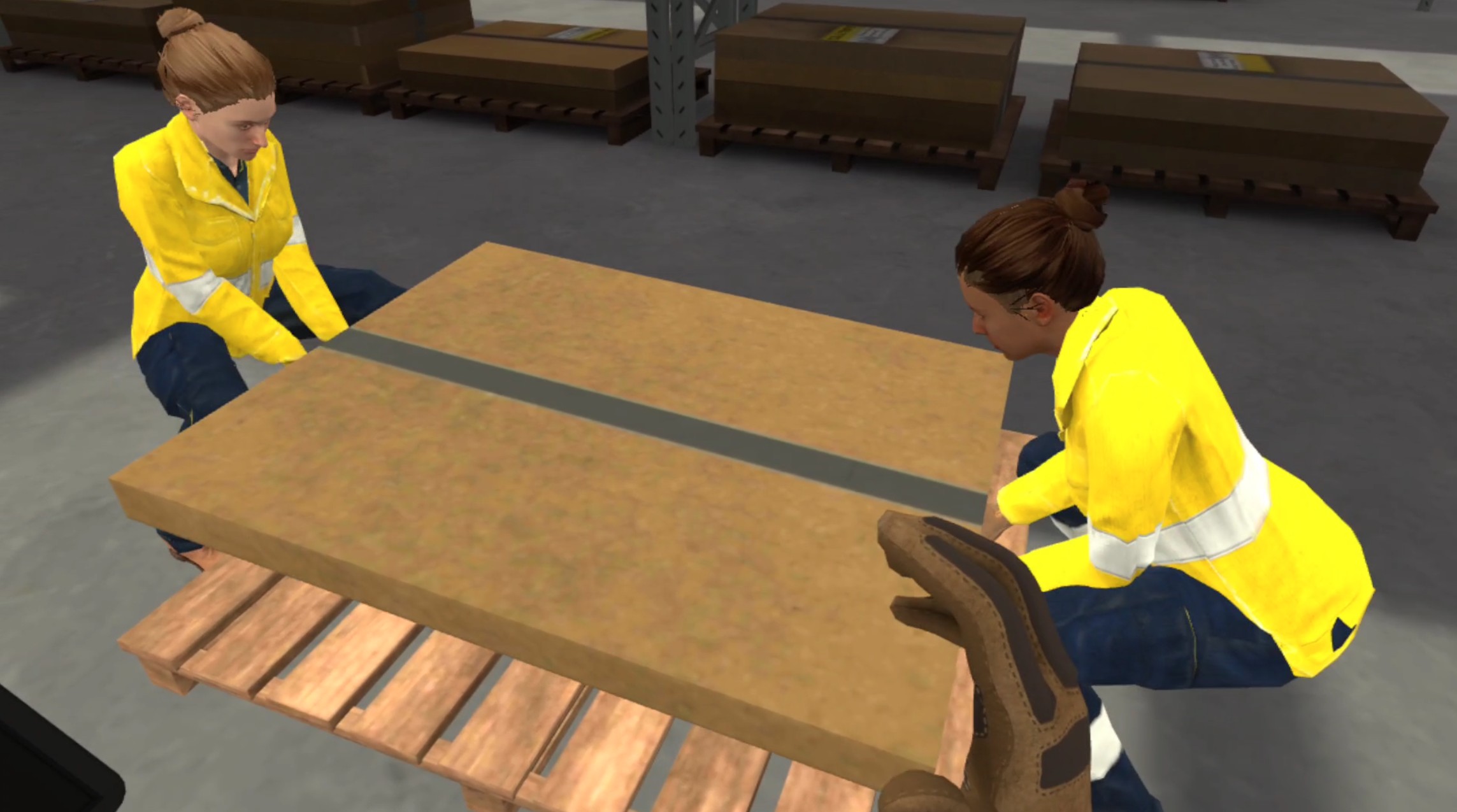
- Using correct posture with knees bent, back straight, and feet positioned shoulder-width apart.
- Keeping loads close to the body to reduce strain and improve control.
- Recognising poor lifting posture that increases strain and injury risk.
- Preventing overexertion and repetitive movements that lead to cumulative injuries.
- Addressing overlooked hazards such as obstacles, restricted access, or improperly stored items.
Overview
About The Course
Manual handling remains a primary cause of workplace injuries and compensation claims, despite being largely preventable through correct practice and awareness.
The training places users in high-risk manual handling scenarios where they are required to:
- Identify unsafe lifting, carrying, and movement tasks.
- Understand which musculoskeletal systems face the highest strain and injury risk.
- Apply correct lifting techniques and practical risk reduction methods.
- Use the Hierarchy of Controls to manage manual handling hazards.
- Respond to real-time challenges to prevent injury and improve site safety.
This practical experience strengthens physical awareness and decision-making, supporting safer movement habits that carry through every shift, not only during training sessions.
Features:
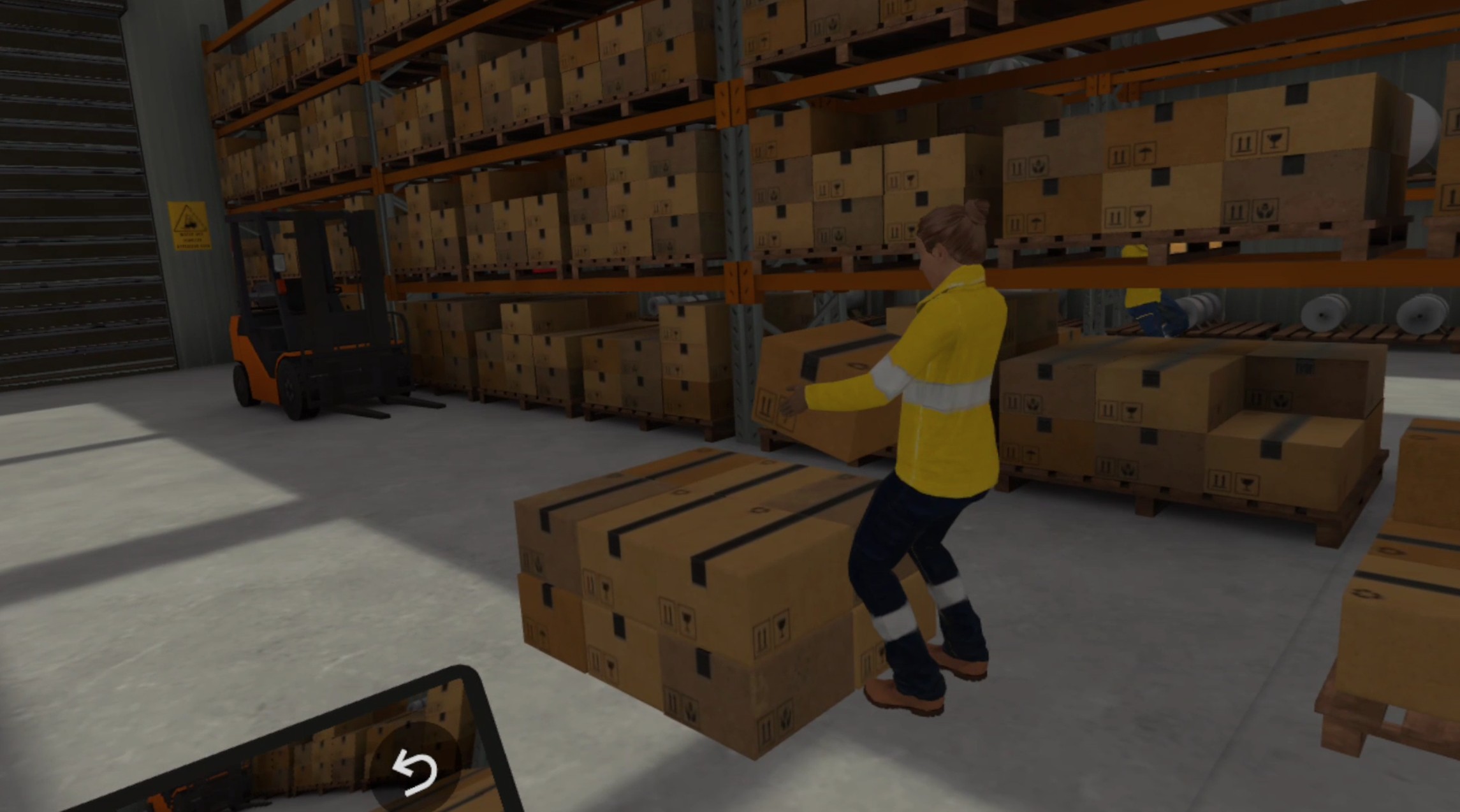
- Explore an immersive warehouse environment as the consequences of poor manual handling occur around you
- Provide solutions to hazardous situations and watch them take effect
- Integrated analytics and student performance
- Modelled from Unit of Competency: HLTWHS005
Languages:
English, Arabic, Bosnian, French, German, Hindi, Italian, Lao, Malayalam, Mandarin – Simplified Script, Mandarin – Traditional Script, Polish, Portuguese, Serbian, Spanish, Urdu
Duration:
14 minutes run time
Device/Platform:
VR
Product Format:
SaaS
Media Type:
3D
Tags:
Training, VR
Content Creator:
Next World