

- Learn the Fire Tetrahedron, including heat, fuel, oxygen, and the chemical chain reaction.
- Recognize how each element contributes to ignition and how extinguishing agents disrupt the process.
- Understand smoke-related risks, including reduced visibility and toxic inhalation.
- Identify the six fire classes:
- Class A: Ordinary combustibles such as wood and rubber.
- Class B: Flammable liquids including fuels and thinners.
- Class C: Flammable gases such as butane and propane.
- Class D: Combustible metals including magnesium.
- Class E: Electrically energized equipment.
- Class F: Cooking oils and fats.
- Understand how incorrect extinguisher selection can escalate a fire.
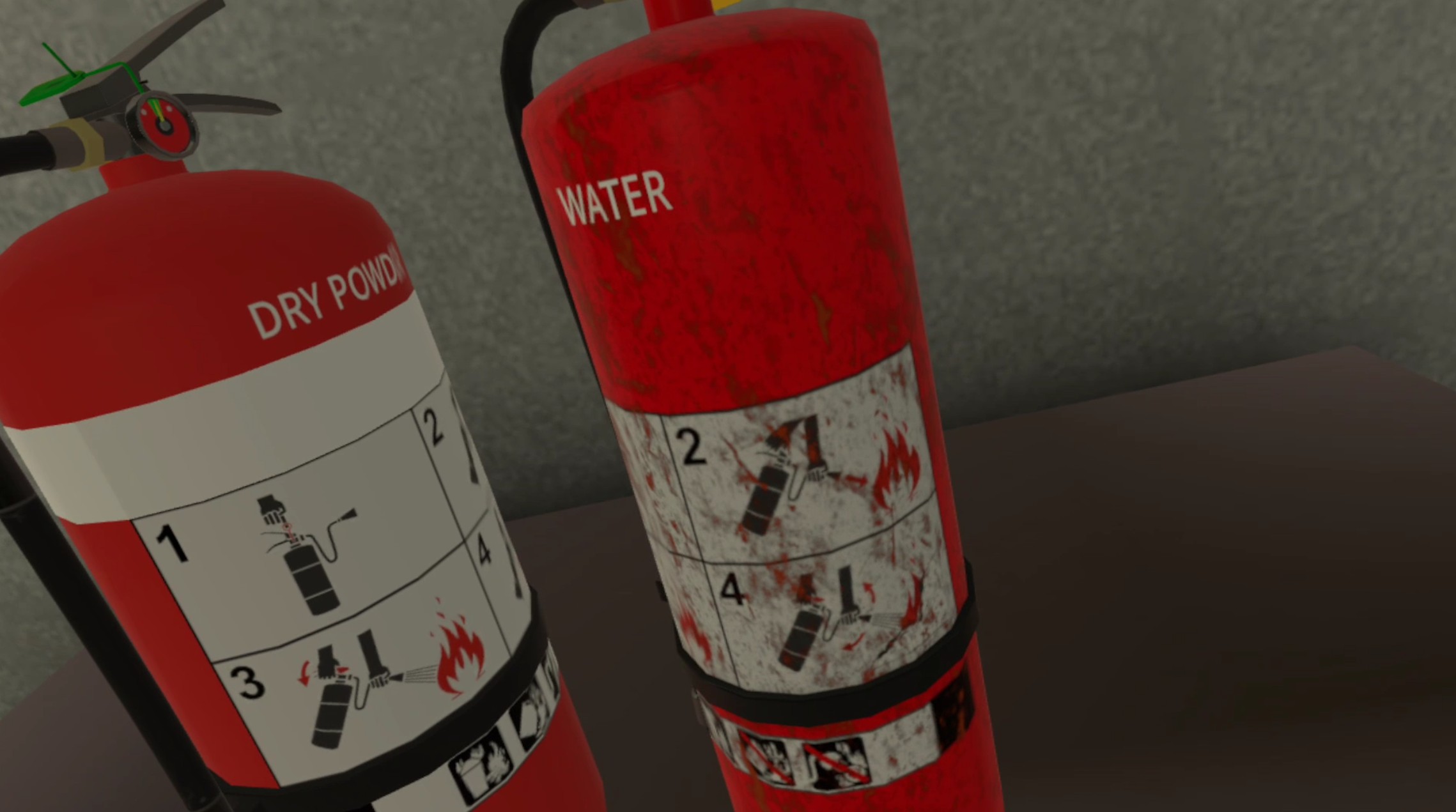
- Identify essential equipment such as extinguishers, fire alarms, sprinklers, and fire doors.
- Recognize correct signage placement and inspection requirements, including pressure gauge checks and scheduled inspections.
- Assess extinguisher readiness by checking anti-tamper seals, corrosion, and pin integrity.
- Use a virtual tablet camera to capture potential hazards.
- Evaluate contextual fire risks, including obstructed exits, blocked signage, and exposed fuel sources.
- Apply critical judgment by recognizing that not all observed conditions represent hazards.
Prepare teams to recognize fire risks early and prevent incidents through immersive simulations that build hazard awareness across office and high-risk industrial environments, teaching identification of the six fuel classes, inspection of fire safety equipment, and practical actions that reduce the likelihood of a fire emergency.
Fire hazards exist in every workplace, making awareness the primary defense against incidents.
Participants progress through interactive scenarios that require active decision-making and observation, including:
- Identifying fire hazards across varied workplace environments.
- Capturing hazards through in-simulation photography to trigger knowledge checks.
- Classifying the six fuel types and understanding their associated risks.
- Inspecting extinguishers and other fire safety equipment for operational readiness.
- Applying corrective actions in real time to reduce ignition risks.
This practical training reinforces everyday hazard awareness, supports regulatory compliance, and strengthens a proactive safety culture across industries.
Features:
- Interact with common workplace objects to understand their associated fire classes
- Practice identifying typical fire hazards across operational environments
- Complete a site safety risk inspection under exam-style conditions
- Access integrated analytics to track learner progress and performance
- Modelled from Unit of Competency: MSMWHS212
English, Arabic, Bosnian, French, German, Hindi, Italian, Lao, Malayalam, Mandarin – Simplified Script, Mandarin – Traditional Script, Polish, Portuguese, Serbian, Spanish, Urdu
22 minutes run time
VR
Stand-alone
3D
Training, VR
Next World